• Home
  • Dogs
  • Wild
  • Cats
  • Animal Cloning
  • Horse
  • Pets in General
    • Pet Owners And How Their Health Affects Their Pets
  • Animal Hybrids
  • Pet Insurance
  • Dog Obedience Training
  • Birds
  • Vet Jobs Function And Salaries
  • Extinct Animals
  • Funny Animals
  • Create Your Own Pet Blog
  • Ebooks
  • Cute Dog Pictures
  • Comments
Dogs and Cats Pet Care and Advice plus Wild Animals.

Elizabethian Collar (Cone of Shame) Use and Best Alternatives

9/11/2017

0 Comments

 
Cone of Shame
Cone of Shame aka Elizabethian Collar
Picture
Cone Collar Dress
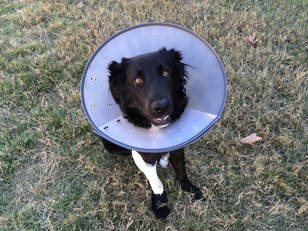
Have you ever been to the vet and notice a few dogs with what looks like a cone around its neck? That is not a new fashion statement that the vet is promoting and there are no modeling agent waiting outside to give the dog a contract. That cone that is placed around the dog’s neck actually serves a couple useful purposes. It is known in the dog community as the cone of shame. But the real name is the Elizibethian Collar It is also referred to as, E-Collar, Buster collar or pet cone. Why is it called that? I thought you would never ask. Back in the old time colonial days when Britain decided that every piece of land on district Earth was belonged to the queen, there were fashion statements being made in the Palace. Queen Elizabeth had a fancy way of dressing where she wore dresses with enormous collars that ascended from her neck line all the way up to her mouth area. These were royalty wear and many prominent English ladies also did the same.  

The E Collar or Pet Cone as simple as it seems is quite ingenious. When dogs go to the vet for various illnesses. If the animal receives surgery, stitches, patches over rounds or anything of that nature. The animal will always tend to lick the area where any foreign matter is such as those stitches and patches. Pet cats and dogs have been known to gnaw away and even chew out stitches and patches causing wounds not to be properly healed. If the animal licks and chews those unhealed wounds, it can cause irritation and infection, which may leave a hairless, discolored, ugly scar for life. The cone of shame or E-Collar is placed over the dog or cat’s head and prevents the movement of the head to chew at those tender areas of the animal. The cone serves the same purpose as a claw wrapping which would prevent the animal from scratching away at wounds to create further damages.

Not many dog owners are fund of the cone of shame and of course, no dogs like to have that big old plastic thing around its head looking liking a barking bulb.  So they have had several alternatives to this E-Collar.

Can my dog eat with an E collar on?
If your dog normally eats or drinks from a deep bowl but refuses to eat with the collar on, try offering food in a shallow dish or plate. If you feel you must remove the protective collar, make sure your pet is supervised while eating, and replace it as soon as the meal is finished. But why go through all of that when there are good alternatives to the cone of shame.


Cone of Shame Best Alternatives

Bark Not Collar

Click Image for Details

Click Image For Details

2. Comfy Collar
Who wants a plastic cone around their dog’s neck causing the animal discomfort when they can get a comfy collar to replace the cone of shame. This comfortable alternative to the cone of shame is made from nylon and foam material which brings flexibility along with comfort for your dog. This comfy collar allows your dog to have the natural abilities to feeding and drinking because it has “Stays” which are removable. These “stays” keeps the foam structure intact. The cone remains secure and holds its shape by attaching it to the pet’s collar using loops on the device. The Comfy Collar features a reflective fabric to keep you and your pet safe while going outside at night. This medical device comes in six sizes and can protect both canines and felines.
Ditch The Cone of Shame.
Your vet will not supply these fancy collars, they will definitely fit your dog with that cone of shame. If you know that your dog may be up for stitches, wound cleaning or another vet service. Ensure that you get the dog a collar which will make him/her comfortable even after leaving the vet.
0 Comments

Are Pit-bulls Really an Aggressive Dog Breed?

9/9/2017

0 Comments

 
Picture
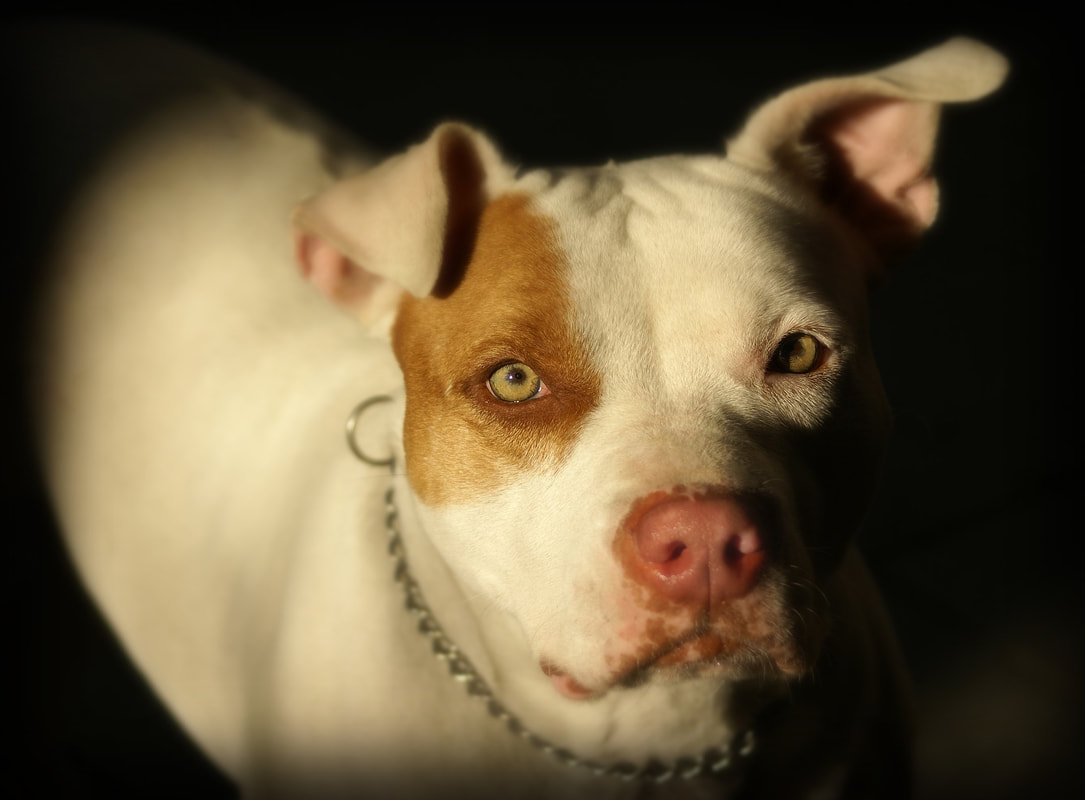
For probably most of my life (quite q good number of years) I believed all the viscous prejudice about Pit Bulls. Interestingly enough their breed is actually American Staffordshire Terriers; were once considered the "Nanny-Dog" because of their gentleness, behavior, loyalty, and loving .

 Then the drug dealers, criminals of all distinction chose this particular breed to teach them to kill . (Any breed could have been chosen. What if they had chosen the Collie?? America's beloved Lassie!!) The methods used to do this were unspeakably horrible.

But there are many levels to this question, and the short answer is…no, because you can’t breed “aggression.” You can only teach it.
1. Pit bull
This is a breeding grouping that consists of several breeds, each of which have a different history. They essentially all came from a mixture of bulldogs and terriers (hence, “bull terrier”) but several lines have descended from that mix. To say that a Staffordshire bull terrier will have the same temperament as an American pit bull terrier is foolish, but in America, both will be called a pit bull and are subject to breed-specific legislation aimed at pit bulls. The reason this is important is because when some site puts together bite “statistics,” they are putting anywhere from 4–30+ breeds into one grouping, them comparing them collectively to individual breeds.

2. Because of their appearance and reputation, pit bulls are far more likely to be obtained by someone wanting to use them as a status symbol or guard dog. Dogs in such a position are not properly socialized, are often kept outside instead of with the family, and are far more likely to get loose. Due to this, it is probably statistically accurate to say that a higher percentage of pit bulls are aggressive than other breeds, but it’s not due to some genetic difference. If our society treated other breeds the same way we treat pit bulls, you can bet those other breeds would be seen as far more dangerous.
3. As I mentioned earlier, you can’t breed aggression into a dog. You will often hear that pit bulls were bred specifically to be fighters, and in many cases this is true. But the traits that were bred into them for this purpose are traits that can be easily re-purposed for a loving family dog. For instance, pit bull breeds were bred with exceptional loyalty. If you want to teach a dog to fight and kill another dog, then you need a dog with that kind of loyalty to its master. The pit bull isn’t fighting the other dog because it wants to, but because its master wants it to. It’s like nuclear power…you can use it to power a city or to flatten a city. Another trait is a high pain tolerance, which obviously would be good for fighting. However, this also makes them less likely to turn on a child that pokes them in the eye or to hate human beings after one mistreats them. There are stories upon stories of pit bull breeds being brought to shelters in terrible shape with all kinds of illnesses and wounds, and they turn out to the be sweetest dog in the world. That’s the forgiveness of a pit bull.
4. Be wary of any site claiming “statistics” that show irrefutable evidence of pit bull aggression. These statistics are taken from eyewitness and media accounts, neither of which are reliable sources to identify a pit bull. In fact, the recent pit bull ban in Montreal was a reaction to a woman being killed by two dogs, which were said to be pit bulls. However, the dogs are registered as boxers and the DNA results of the dogs have conveniently not been released yet. With media accounts, let’s just say a headline with “pit bull” in it will sell more than with any other breed in the title. This means ANY pit bull attack will be reported with higher frequency and the story will spread more quickly, which leads to people only getting a small part of the story from which to draw conclusions
All of these things lead to one very important truth: pit bull owners need to exercise a greater responsibility than most other dog owners. There is a target on the back of every pit bull. You may want to bring your dog to the dog park and let him loose, but what happens when a black lab attacks your pit bull? Regardless of the outcome, the pit bull will be blamed, and until those attitudes change, pit bull owners need to be especially vigilant in protecting their dogs from the results of stigma.

Author:Quora

0 Comments

Dog Treatment in Dubai

9/6/2017

0 Comments

 
Picture
Dogs in Dubai
Being a dog in Dubai may be one of the best things to happen to any canine. Dogs that have become strayed either by owner passing off or owner migrating and leaving everything behind, including their pets, will find refuge at dibai's cool air conditioned dog park.

DUBAI // Tight rules on where and how dogs can be walked in the emirate have left few options for people who wish to let their pets run free.
That is changing, thanks to a joint project by a Saluki breeder and two pet lovers who have opened Dubai’s first outdoor park designed for dogs.
The site in Al Awir, backed by Dubai Municipality, is the only outdoor space where dogs can run without their leads in a safe environment.
Jan Al Mheiri, a Scot who has been in the UAE for more than 25 years, encouraged her Emirati husband to donate farmland near their home in Al Awir.
The Bark Park has been developed with irrigation and electricity and opened as an official dog-walking facility.
Mrs Al Mheiri, who owns two Salukis and a Golden Retriever, said it would encourage responsible dog ownership.
“We are a work in progress but we have very big plans for the future,” she said. “It is a traditional place but it has all the things that dogs need.
“The municipality has a thankless task with regards to animal welfare issues, but they have been very helpful and supportive. It would not have happened otherwise.”
In Dubai, dogs are banned from all beaches and public parks, and in most newer developments.
The Bark Park encourages owners to socialise and can be used for a fee that funds the project.
“We needed to have permission to have the dogs running free on the land and that took time,” Mrs Al Mheiri said.
“I had to provide compelling reasons why this was a good idea and helped with animal welfare issues. Attitudes towards dogs are changing here but it is a very slow process.”
Saturdays are reserved for Salukis, the traditional Bedouin dogs, which can run as fast as 70 kilometres per hour.
Hamad Al Ghanem, founder of the Salukis of Arabia Club, helped to develop the park project.
“We approached the landowner with the idea, as we were looking for somewhere to run the Salukis,” he said. “It was important that it was somewhere away from camel farms and safe for the dogs.
“We had to have the area checked to ensure that they can’t escape if they are running free. It needs more trees and shade to make it more like a park, but it has great potential.

“I have helped with ideas, as I know Salukis so well. This park is perfect for all dog lovers.”
Other plans include a barbecue area and a site office. Dogs which use the park must be vaccinated and microchipped, and nervous dogs should be muzzled as a precaution.
Children younger than 12 are not allowed in the park. There is an area reserved for smaller dogs.

Entry fees are Dh50 for the first dog, and Dh25 for a second and third.
A maximum of 20 dogs are allowed in the park at any time.
Anna Bensalah has been volunteering for the park project and promotes events such as the Saluki Fun Run, which she has been organising with Rooster Tail Sports and Entertainment.

“The Saluki Fun Run was popular, so we realised there was a demand for a more permanent outdoor park for dogs to enjoy,” she said.
“All dogs need to run free but Salukis in particular are bred to run free. They can run long distances, up to six kilometres. So for them to be healthy and happy, they have to run but they also need to be safe.”

0 Comments
<<Previous
Forward>>

    RSS Feed

    Funny Dog Adventure short Story

    RSS Feed Widget


    Categories

    All
    Dog Behavior
    Dog Breeds Terrier
    Dog Care
    Dog Food
    Funny
    Health
    Need To Know
    Puppies

    Archives

    June 2020
    May 2020
    April 2020
    March 2020
    February 2020
    January 2020
    December 2019
    November 2019
    October 2019
    July 2019
    June 2019
    May 2019
    April 2019
    March 2019
    February 2019
    January 2019
    December 2018
    November 2018
    October 2018
    September 2018
    August 2018
    July 2018
    June 2018
    May 2018
    April 2018
    March 2018
    February 2018
    January 2018
    December 2017
    November 2017
    October 2017
    September 2017
    August 2017
    July 2017
    June 2017
    May 2017
    April 2017
    March 2017
    February 2017
    January 2017
    December 2016
    November 2016
    October 2016
    September 2016
    August 2016
    July 2016
    June 2016
    May 2016
    April 2016
    March 2016
    February 2016
    January 2016
    December 2015
    November 2015
    October 2015
    September 2015
    August 2015
    July 2015
    June 2015
    May 2015
    April 2015

www.dogcatplace.com
Blog Author

    Get The Latest and Cool Pets and animal Info Right In Your Mailbox

Subscribe to Newsletter
Clive Williams is an Animal Enthusiast and the father of two dogs, Nica and Venom.
  • Home
  • Dogs
  • Wild
  • Cats
  • Animal Cloning
  • Horse
  • Pets in General
    • Pet Owners And How Their Health Affects Their Pets
  • Animal Hybrids
  • Pet Insurance
  • Dog Obedience Training
  • Birds
  • Vet Jobs Function And Salaries
  • Extinct Animals
  • Funny Animals
  • Create Your Own Pet Blog
  • Ebooks
  • Cute Dog Pictures
  • Comments